Lecturer & PhD student

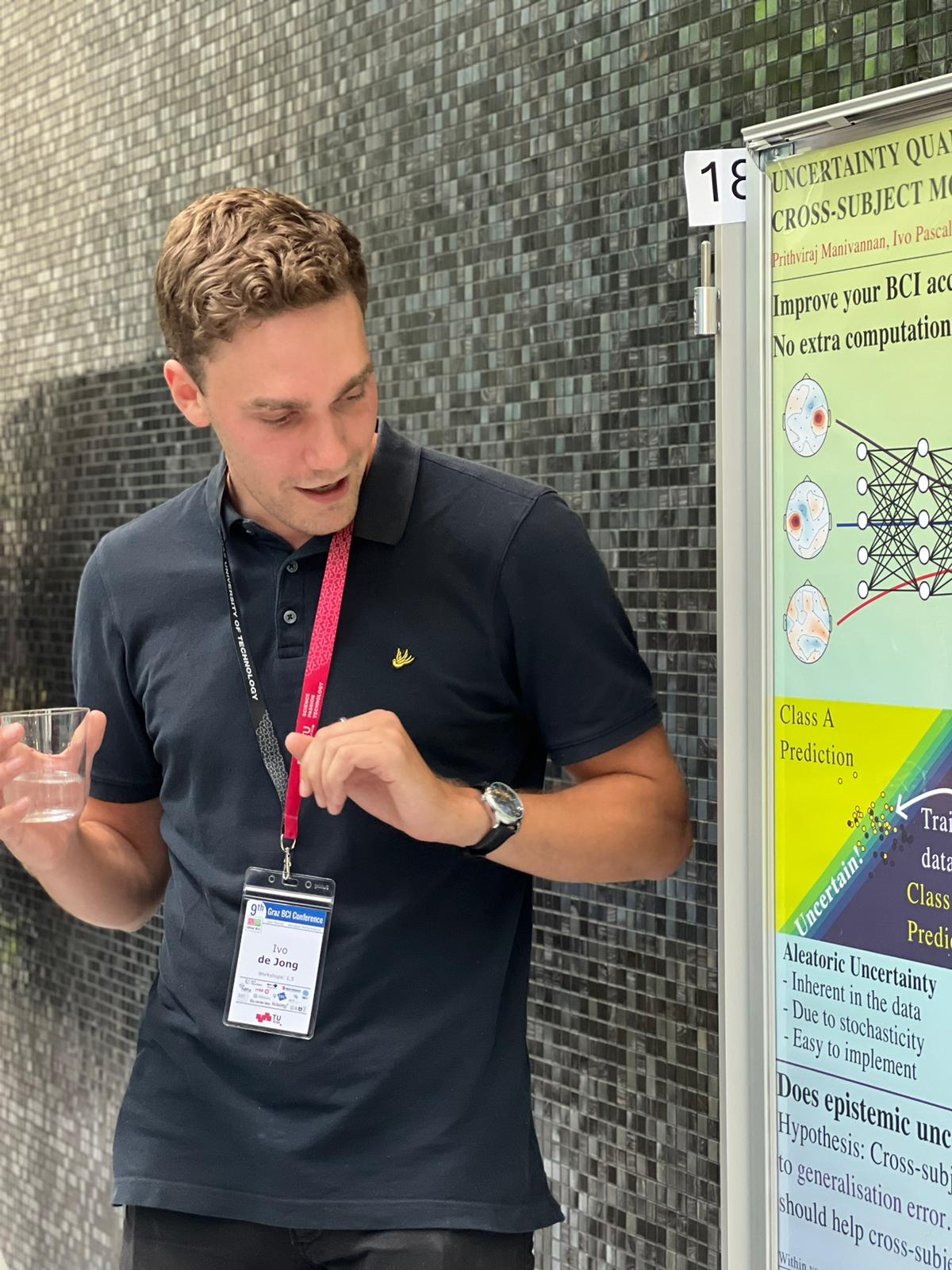
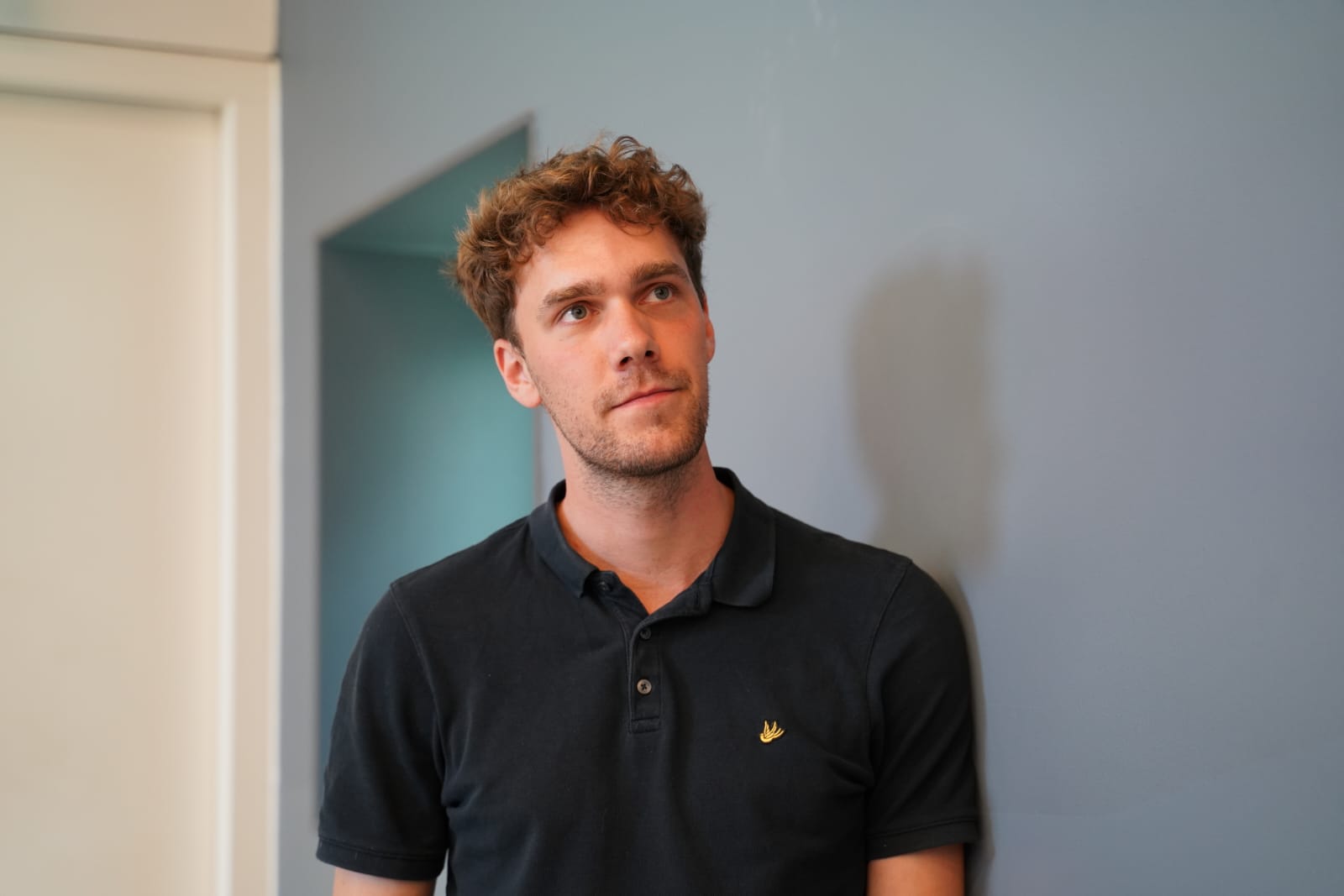
Hi, I'm Ivo! I'm a Lecturer & PhD student at the University of Groningen. I do research on Machine Learning methods with Uncertainty Estimation, and how those may be applied to Brain-Computer Interfaces.
As a Lecturer I teach in my area of expertise. My teaching is therefore focused on Uncertainty in Machine Learning, Brain-Computer Interfaces and Deep Learning. I enjoy combining my research and teaching when supervising Bachelor and Master thesis projects, or developing hands-on assignments that dive into the technical details of modern AI.
Contact
A picture of Cool Name
2026
Uncertainty Quantification in Machine Learning for Biosignal Applications - A Review
Journal of Healthcare Informatics Research. Ivo Pascal de Jong, Andreea Ioana Sburlea, Matias Valdenegro-Toro

Abstract: Uncertainty Quantification (UQ) has gained traction in an attempt to improve the interpretability and robustness of machine learning predictions. Specifically (medical) biosignals such as electroencephalography (EEG), electrocardiography (ECG), electrooculography (EOG), and electromyography (EMG) could benefit from good UQ, since these suffer from a poor signal-to-noise ratio, and good human interpretability is pivotal for medical applications. To determine how uncertainty estimation can be used for biosignal tasks, we investigate current methods, use cases, applications, evaluations, and uncertainty measures. In this paper, we systematically review the state of the art of applying Uncertainty Quantification to Machine Learning tasks in the biosignal domain. All works from Web of Science, Scopus, IEEE XPlore and PsycINFO that discuss uncertainty in Machine Learning on one of the aforementioned biosignals is included. We present various methods, shortcomings, uncertainty measures and theoretical frameworks that currently exist in this application domain based on the 53 reviewed papers and related literature. We address misconceptions in the field, provide recommendations for future work, and discuss gaps in the literature in relation to diagnostic implementations as well as control for prostheses or brain-computer interfaces. Overall it can be concluded that promising UQ methods are available, but that research is needed on how people and systems may interact with an uncertainty-model in a (clinical) environment. Open Access Link
2026
The Challenge of Out-Of-Distribution Detection in Motor Imagery BCIs
arXiv preprint. Merlijn Quincent Mulder, Matias Valdenegro-Toro, Andreea Ioana Sburlea, Ivo Pascal de Jong

Abstract: Machine Learning classifiers used in Brain-Computer Interfaces make classifications based on the distribution of data they were trained on. When they need to make inferences on samples that fall outside of this distribution, they can only make blind guesses. Instead of allowing random guesses, these Out-of-Distribution (OOD) samples should be detected and rejected. We study OOD detection in Motor Imagery BCIs by training a model on some classes and observing whether unfamiliar classes can be detected based on increased uncertainty. We test seven different OOD detection techniques and one more method that has been claimed to boost the quality of OOD detection. Our findings show that OOD detection for Brain-Computer Interfaces is more challenging than in other machine learning domains due to the high uncertainty inherent in classifying EEG signals. For many subjects, uncertainty for in-distribution classes can still be higher than for out-of-distribution classes. As a result, many OOD detection methods prove to be ineffective, though MC Dropout performed best. Additionally, we show that high in-distribution classification performance predicts high OOD detection performance, suggesting that improved accuracy can also lead to improved robustness. Our research demonstrates a setup for studying how models deal with unfamiliar EEG data and evaluates methods that are robust to these unfamiliar inputs. OOD detection can improve the overall safety and reliability of BCIs. Open Access Link
And 8 more
View all

Research

I'm interested in how Machine Learning methods behave when subjected to the reality of datasets that are often noisy, sparse or otherwise non-ideal. The research I do on Uncertainty in Machine Learning is therefore largely focused on empirical experiments where data's and algorithms interact. I'm specifically interested in distinguishing between data uncertainty and model uncertainty in Deep Learning.
For Brain-Computer Interfaces I'm interested in applying these Uncertain Machine Learning methods and seeing whether they give meaningful benefits to researcher or users. Personally, I'm most interested in Brain-Computer Interfaces when they can be useful for ALS, spinal cord injury, or stroke patients. Through decoding brain signals from movement attempts, I aim to achieve meaningful and useable control of a device.
I've selected some highlighted papers on the left. All publications are freely available as Open Access, just click the link.

Collaboration & Supervision

Interesting research comes from sharing interesting ideas, and many of my papers come from supervising excellent students or collaborating with excellent researchers. I am currently open to collaborations with:

  • Bachelor or Master students looking to do a research project.
  • Businesses interested in internship projects or with an interesting research problem.
  • Researchers looking to work with (uncertain) Machine Learning or Brain-Computer Interfaces.
  • Educators interested in AI.

If you're considering working with me, feel free to get in touch. I'd be happy to have a cup of coffee with you!

Teaching

A core principal in my teaching concerns enabling students to develop their interests and skills. By supporting students in following up on their own ideas we can cultivate a critical research interest. This additionally instills confidence and offers a more thorough comprehension of the topic.
I teach in various courses in the AI and Computational Cognitive Science curricula. My teaching is primarily focused on various Machine Learing courses and courses related to Brain-Computer Interfaces, but also includes Cognitive Modelling with ACT-R.
My main pride is the Applied Machine Learning course (previously known as Machine Learning Practical), which I developed and teach myself. In this course students select a Machine Learning-based project, and develop this throughout the course. This gives them hands-on learning and allows them to develop in a direction of their interest. The course is open-ended, but students are specifically encouraged to learn the skills to prepare them to be AI-professionals. The lecture content I teach in this course is designed by considering my own experience as a student and later AI-professional and seeing what information I missed when I entered the labour market. By relating the educational material to my experience as an AI-professional students clearly see the relevance and what they want to study.

A picture of Cool Name
2023 - 2026
Applied Machine Learning
Design and develop the course setup and material, supervise teaching-assistants and teach lectures.
2025 - 2026
Neural Networks
Update and adapt course setup and material, supervise teaching-assistants and teach lectures.
2024 - 2025
Trustworthy & Explainable AI
Develop and teach hands-on tutorial sessions.
2024 - 2025
Uncertainty in Machine Learning
Design and teach programming tutorial sessions aimed at implementing Uncertainty Quantification methods.
2024 - 2025
Neuroprosthetics
Co-design, develop and conduct assessment.
2023 - 2025
Non-Invasive Brain-Computer Interfaces
Support practicals and BCI-experiments.
2023 - 2024
Cognitive Modelling Summer School
Support visiting PhD students and researchers in learning about ACT-R.
2022-2025
Guest Lectures
Various guest or substitute lectures for Introduction to Machine Learning, Uncertainty in Machine Learning, Non-Invasive Brain-Computer Interfaces, Deep Learning, Deep Learning for Forestry, Machine Learning for Computational Cognitive Science, ...

Publicity & Outreach

As a researcher, one of the nice parts of my job is to spread knowledge. This gives me the opportunity to present my research to diverse audiences including researchers, companies, the general public and children. I have presented research, given demo's or otherwise engaged with an audience for:

  • Summer School Data Science and AI in Health - A talk describing my research on Uncertainty and its relevance to Healthcare, with an emphasis on cautious tales for AI enthousiasts.
  • Politie Innovatiehuis Noord Nederland - AI, Police and Ethics. A masterclass on how modern AI works, how it intersects with police work, and whether future developments are really desirable.
  • Pints of Science - An informal talk about my research on BCIs in a bar.
  • CogniGron at Work - A talk about BCIs and the brain and how this relates to CogniGron's expertise: neuromorphic computing.
  • Zpannend Zernike - A demo of a BCI being used in real-time. We informally explain the concepts of a BCI to children and parents to excite them about science, and help them differentiate from science-fiction. Thanks to Bernard Renardi and Andreea Sburlea!
  • European Research Night - A science-pitch competition using a silent-disco system. Competitively pitch my research to a general audience while other researchers are telling about their own work.
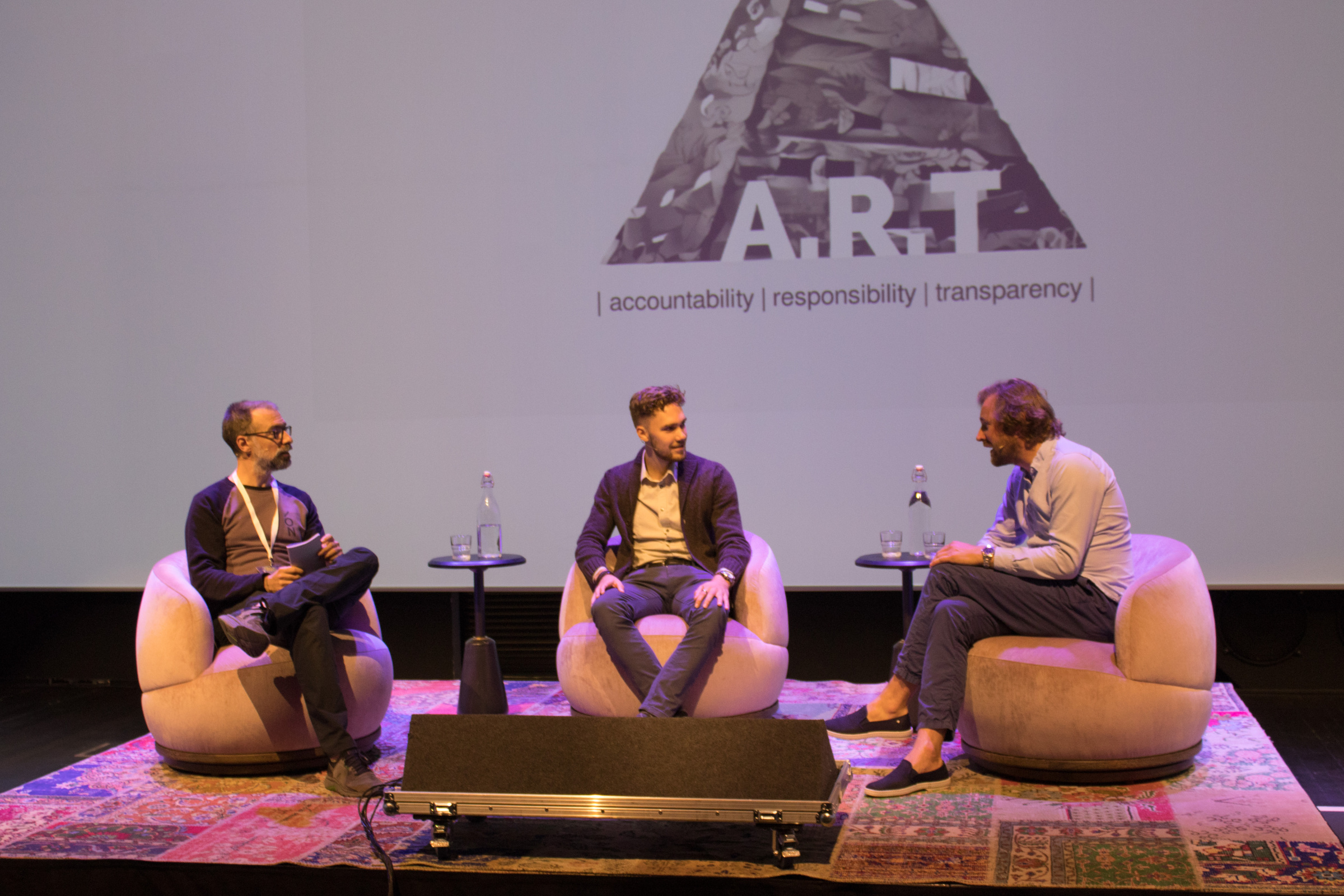
  • Cover Symposium Accountability, Responsiblity and Transparency in AI - A panel discussion on how to make sure AI is developed responsibly with proper governance.

Feel free to invite me to give a talk, demo, or workshop. If I have time, I'd be happy to join!